
Yes, you can complete a Roth conversion into a self-directed Roth IRA that holds IRS-approved gold. It is a taxable conversion, so the converted amount counts as income in the year you convert, and it requires a qualified IRA custodian along with IRS-compliant metals. Using an experienced custodian helps you avoid noncompliant items that the IRS can treat as a taxable distribution.
TL;DR:
- Converting funds into a gold-backed Roth IRA is taxable if starting from traditional IRA or 401(k) accounts, but transfers from existing Roth IRAs are usually non-taxable.
- IRS-approved gold products must meet strict fineness standards, with bullion and certain coins qualifying, while unverified products risk disqualification and tax penalties.
- Using a qualified custodian for storage in approved depositories is mandatory, and different fee layers and timing can affect the total cost and tax reporting.
- Direct trustee-to-trustee transfers are preferred, as they avoid triggering taxes or penalties associated with withdrawals or rollovers with tight 60-day deadlines.
- Conversions are best timed for future high-tax years or long-term growth but should be approached cautiously if liquidity is needed soon or tax circumstances are unfavorable.
Table of Contents
- How to convert funds into a gold-backed Roth IRA
- Tax and IRS rules behind Roth conversions and metal-holding IRAs
- Which gold and metals qualify for an IRA, and how to confirm it
- Custody, storage, and how valuations get reported
- Costs, timing, and the mistakes that trigger a tax bill
- Risks and disadvantages worth weighing before you convert
- Questions to ask your custodian or dealer before you convert
- How GoldRock Metal Exchange supports a precious metals Roth conversion
- A practical note on timing and caution
- Start your precious metals Roth conversion with GoldRock
- FAQ
- Sources
How to convert funds into a gold-backed Roth IRA
The process looks different depending on where your money starts. Converting pre-tax funds from a traditional IRA or 401(k) into a Roth account is a taxable event, so understanding what’s taxable and what isn’t in crypto loans and capital gains can provide useful insights into tax treatment of conversions. Moving money you already hold in a Roth IRA into a new self-directed Roth IRA is usually a trustee-to-trustee transfer, which does not create new taxable income.
- Select a self-directed Roth IRA custodian with documented experience administering precious metals accounts.
- Decide whether you are converting pre-tax funds (taxable) or transferring existing Roth funds (generally not taxable).
- Complete the custodian’s conversion or transfer paperwork and specify a trustee-to-trustee transfer whenever possible.
- Fund the new account and instruct the custodian to purchase IRS-approved bullion or coins.
- Confirm the depository and storage arrangement before the purchase settles.
Whenever you can, request a direct trustee-to-trustee transfer rather than taking a distribution yourself. Rollovers carry a 60-day deadline, and missing it turns the entire amount into a taxable distribution, plus a possible early withdrawal penalty if you are under 59 and a half. If you want a second set of eyes on your paperwork before you submit it, you can request a free precious metals consultation by calling (888) 859-0978.
Tax and IRS rules behind Roth conversions and metal-holding IRAs
A Roth conversion is not a loophole around taxes; it is a timing choice. Under Publication 590-B, the amount you convert from a traditional IRA is included in your gross income for the year you receive the distribution, and conversions made after December 31, 2017, cannot be recharacterized back to a traditional IRA. Once you convert, that decision is final for the tax year.
- Conversion income is taxed at your ordinary rate in the year of conversion, per Publication 590-B.
- Post-2017 conversions cannot be undone through recharacterization.
- Section 408(m) generally disallows “collectibles” in an IRA, with a narrow exception for coins and bullion meeting specific fineness standards, as described in IRS guidance on section 408(m).
The IRA contribution limit rises to $7,500 for 2026, with Roth income phase-out ranges of $153,000 to $168,000 for single filers and $242,000 to $252,000 for married couples filing jointly. Knowing where you fall in these ranges matters when you plan the size and timing of a conversion.
Which gold and metals qualify for an IRA, and how to confirm it
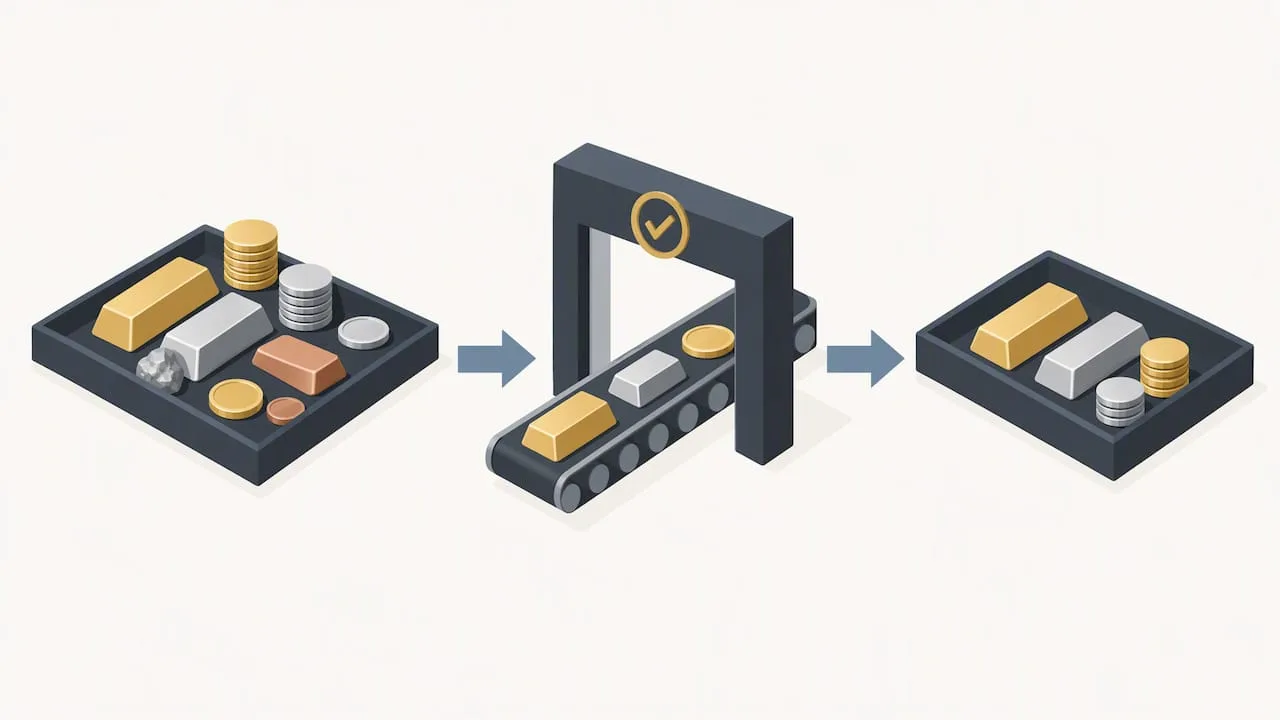
Not every gold product belongs in a retirement account. The IRS exception under section 408(m) covers specific coins and bullion that meet minimum fineness requirements, generally 99.5% or higher for gold and similar thresholds for other metals, as outlined in IRS guidance on collectibles in retirement accounts. Numismatic or “collectible” coins outside that exception can disqualify the holding and trigger a taxable distribution.
- Bullion bars and rounds that meet the required fineness standard for the specific metal.
- Certain coins minted to IRS specifications, when they meet the fineness exception.
- Products lacking clear assay or fineness documentation, which custodians often reject outright.
Pro Tip: Ask your custodian for written confirmation that a specific product, by SKU, meets IRS fineness standards before you authorize the purchase.
Our guide to gold IRA rules and our coin eligibility guide walk through which products typically qualify.
Custody, storage, and how valuations get reported
IRA-held metals must sit with a qualified trustee or custodian; the IRS does not allow you to hold them at home, in a personal safe, or in a safe deposit box you control, as described in IRS guidance on approved nonbank custodians.
- Approved depositories offer segregated storage (your specific metals) or pooled storage (allocated but commingled with other owners’ holdings).
- Storage fees typically bundle insurance coverage with the custody arrangement.
- Custodians issue periodic valuations used for account statements, required distributions, and tax reporting.
Our article on home storage risks covers what happens when an account owner tries to bypass custodial storage.
Costs, timing, and the mistakes that trigger a tax bill
Budget for several layers of cost: the dealer’s premium over spot price, custodian setup and annual administration fees, storage and insurance charges, and any shipping or assay fees tied to the purchase. Settlement timing matters too, since the date your conversion is processed determines which tax year reports the income.
- Dealer premiums vary by product and market conditions at the time of purchase.
- Custodian fees usually include a setup charge plus an annual administration fee.
- Storage and insurance costs are often billed together, either flat or based on account value.
Pro Tip: Confirm with your custodian how long settlement and metal purchase will take, so the conversion lands in the tax year you intend.
Risks and disadvantages worth weighing before you convert
Physical metals bring different tradeoffs than publicly traded securities. Weigh these honestly against your own retirement timeline.
- Selling physical metal can take longer than selling a security, and dealer spreads can reduce your net proceeds.
- Annual custodian and storage fees are an ongoing cost that paper assets typically do not carry.
- Noncompliant products can convert your holding into a taxable distribution, sometimes with penalties if you are under 59 and a half.
- Beneficiaries inheriting a metals IRA need a custodian relationship in place to manage distribution or liquidation.
Questions to ask your custodian or dealer before you convert
Bring this list to any consultation before you sign paperwork or send funds.
- How many precious metals IRAs has your firm administered, and what is your documented process?
- Can you provide written confirmation that the specific products I’m buying meet IRS fineness standards?
- What is your complete fee schedule, including setup, annual, storage, and transaction fees?
- What is a typical settlement timeline from funding to purchase confirmation?
- Is storage segregated or pooled, and what insurance coverage applies?
- How do I request a distribution or redemption, and how long does that take?
- How often will I receive a valuation statement for tax and reporting purposes?
How GoldRock Metal Exchange supports a precious metals Roth conversion
We handle the paperwork for conversions and transfers, help confirm that products meet IRS fineness standards, and coordinate custody with approved depositories. When you’d rather hold metal directly, we also offer insured private delivery outside a retirement account.
- We assist with custodian paperwork for both conversions and trustee-to-trustee transfers.
- We source metals meeting IRS eligibility standards across gold, silver, platinum, and palladium.
- We coordinate handoff to approved depositories for custody and storage.
| Service | What it covers |
|---|---|
| Precious Metals IRA setup | Account paperwork, custodian coordination, product sourcing |
| Insured private delivery | Direct shipment of purchased metals outside an IRA |
Call (888) 859-0978 to request a free precious metals consultation, or start at our Precious Metals IRA page.
A practical note on timing and caution
Conversions can make sense when you expect higher future tax rates or want tax-free growth on a long horizon. They deserve more caution when you need liquidity soon or face a high-income year. This is educational content, not personalized tax advice, so talk with a tax professional before you act.
— Blake
Start your precious metals Roth conversion with GoldRock
We help you move through each step of a precious metals Roth conversion: custodian coordination, sourcing IRS-approved metals, and arranging compliant storage.

- We manage the paperwork for conversions and trustee-to-trustee transfers.
- We source metals that meet IRS standards.
- We arrange custody with approved depositories so your holdings stay compliant.
Call (888) 859-0978 to request a free precious metals consultation, or visit our Precious Metals IRA page to get started.
This article is general information, not a substitute for advice from a qualified financial advisor. Consult a qualified financial professional about your own circumstances before acting on anything here.
FAQ
Is there a Roth IRA for gold?
Yes, a self-directed Roth IRA can hold IRS-approved gold, provided a qualified custodian administers the account and the specific gold products meet fineness standards under section 408(m). Not every custodian supports precious metals, so you need one that specifically offers self-directed accounts.
How much tax will I pay on a $50,000 Roth IRA conversion?
The exact amount depends on your other income and tax bracket for the year, since the converted amount is added to your gross income under Publication 590-B. Because this varies by individual circumstances, a tax professional can calculate your specific liability before you convert.
What are the disadvantages of a gold IRA?
Physical metals can be slower and costlier to sell than publicly traded securities, and ongoing custodian and storage fees add a cost that typical brokerage IRAs do not carry. Noncompliant products also risk being treated as a taxable distribution under IRS collectible rules.
When should you not do a Roth conversion?
Converting may be less suitable in a year when your income is already high, since the added conversion income is taxed at your ordinary rate for that year under Publication 590-B. It’s also worth pausing if you’ll need the converted funds for liquidity soon, since early withdrawals can carry additional tax consequences.