Platinum is generally the tougher choice for everyday jewelry, while gold tends to carry the broader liquidity and investor demand. The FTC’s jewelry guidance shows that purity marks and alloys drive how a piece wears, and market drivers such as industrial demand shape how each metal trades. We lay out both sides below.
TL;DR:
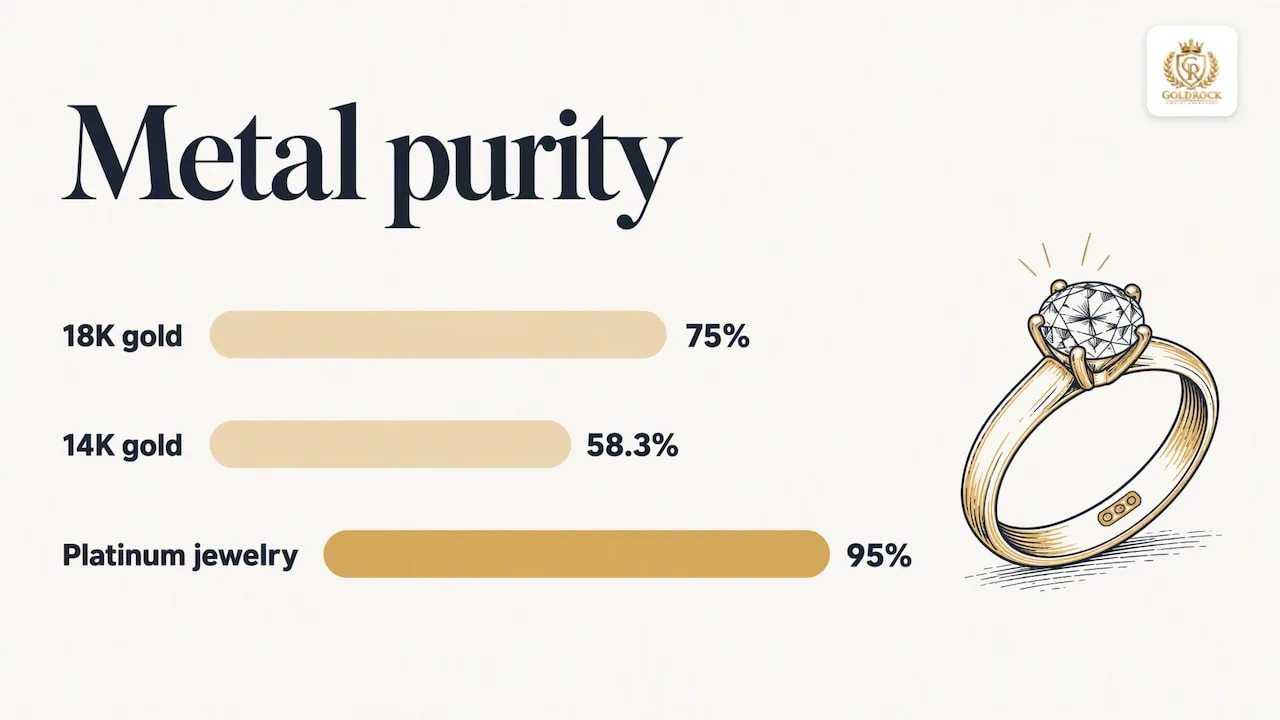
- Verify the stamp and alloy before buying: 14K gold contains 58.3% gold, 18K contains 75%, and 950 platinum is 95% pure.
- White gold may need rhodium replating as its coating wears, while platinum develops a patina through displaced metal and can be polished.
- Platinum supply is concentrated, and industrial demand and production changes can drive price swings; rarity alone does not make it a better investment.
- Jewelry includes fabrication costs and retail markups, so its purchase price does not equal the metal’s market value; check live spot prices before buying.
- IRA eligibility depends on product form and fineness, and a bank or approved trustee must hold qualifying bullion; jewelry does not automatically qualify.
Table of Contents
- Gold vs platinum at a glance
- How karat and fineness shape durability, color and resale
- How each metal wears, scratches and gets repaired
- Color, density and how each metal feels on the hand
- Why gold and platinum behave differently in the market
- What the IRS says about holding gold or platinum in an IRA
- How to choose between gold and platinum
- How I advise clients choosing between the two
- Request a Free Precious Metals Consultation
- FAQ
- Sources
Gold vs platinum at a glance
Here is the quick reference. Use it to decide which sections you need most.
- Purity shorthand: Gold jewelry is usually sold as 18K or 14K. Platinum jewelry is commonly marked 950, meaning 95% platinum.
- Durability: Gold scratches by losing tiny amounts of metal. Platinum scratches by displacing metal, which builds a soft, frosted patina.
- Maintenance: White gold may need rhodium replating over time to keep its bright color. Platinum typically does not need replating, though many owners polish it to restore shine.
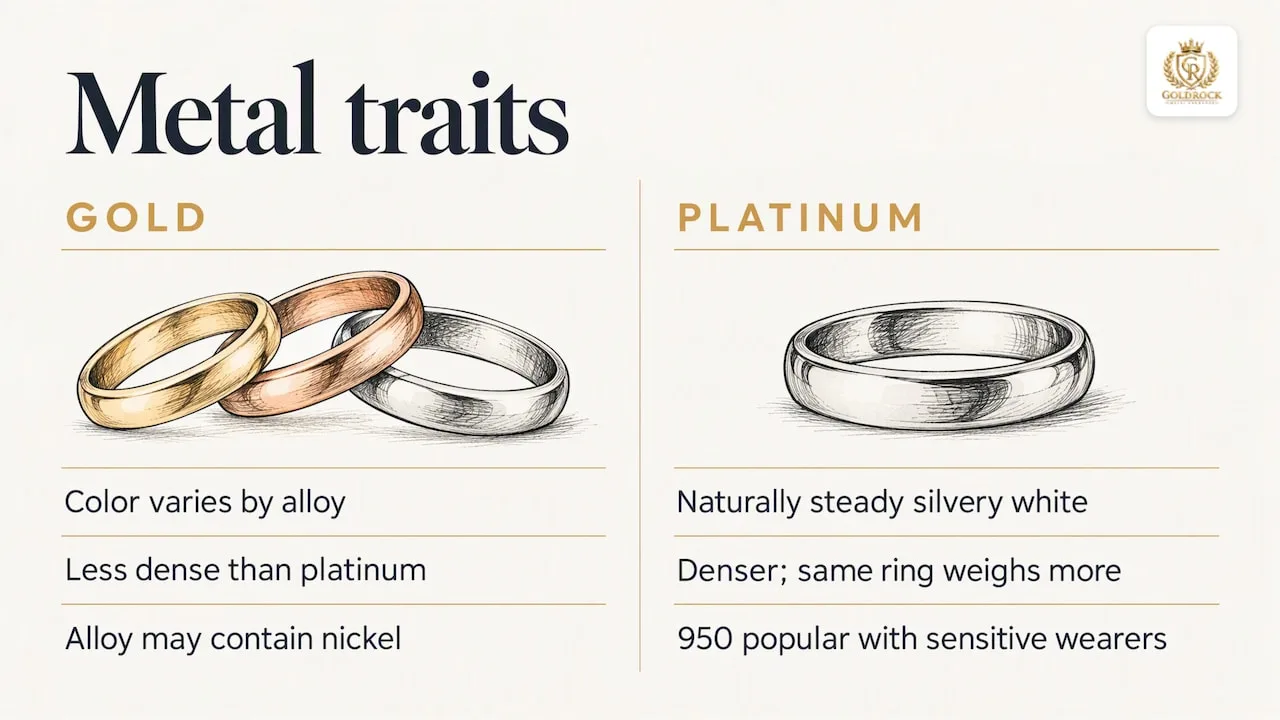
- Weight: Platinum is denser, so a ring of the same size feels noticeably heavier than its gold twin.
- Color: Platinum is naturally white. Gold comes in yellow, white and rose depending on the alloy.
- Price and liquidity role: Gold is widely traded as a store of value with deep demand. Platinum is more tied to industrial use.
- IRA shorthand: Retirement eligibility depends on the product form, fineness and trustee custody, not on the metal name alone. Jewelry does not automatically qualify.
How karat and fineness shape durability, color and resale
Two pieces can both look “white” or both be called “platinum” and still behave very differently. The difference is in the recipe.
Pure 24K gold is soft, so jewelers alloy it with other metals for strength. According to the FTC’s guidance on buying platinum, gold and silver jewelry, 18K gold is 75% gold and 14K gold is 58.3% gold. The rest is other metals such as copper, silver, nickel or palladium. Those added metals change the color, the hardness and how the piece ages. A 14K ring has a smaller share of gold than an 18K ring, which affects both its richness of color and the metal content you could recover at resale.
Platinum follows its own labeling logic. The same FTC guidance says jewelry advertised simply as platinum should be at least 95% pure platinum, which is why you so often see a 950 stamp. If a piece is a platinum alloy or mixed with base metals, the marking should disclose that, so a “Plat” label with a lower percentage is a signal to ask questions rather than assume.
This is why hallmarks matter. A quality mark, paired with the maker’s trademark, tells you what you actually own and who stands behind it. The FTC points out that purity marks and alloy disclosures affect both the value of what you hold and how it wears, so a sound comparison starts with the stamp and the composition, not the retail color name.
Resale follows from the same facts. Buyers and appraisers price a piece by its verified metal content first. A clearly marked 18K or 950 platinum ring with a recognizable maker mark is easier to value than an unmarked or vaguely described one. Before you buy either metal, check the stamp, ask what the alloy is, and get the purity written on the receipt. Never judge the metal by color alone, because white gold, platinum and silver can look nearly identical under shop lighting.
How each metal wears, scratches and gets repaired
Daily wear is where the two metals part ways most clearly. Understanding the mechanics helps you estimate maintenance costs before you commit.
Gold can lose small amounts of metal through wear and polishing. Each time a jeweler buffs out scratches, a thin layer of gold comes off. Over many years and many polishes, a thin band can become thinner. Platinum behaves differently: a scratch usually displaces metal rather than removing it, pushing material to the side and creating a soft, matte patina. Many owners like that worn-in look. Others have it polished back to a mirror finish, which is why FTC practitioner guidance frames the decision around what happens after wear, not just the day you buy.
White gold adds one more step. Most white gold gets its bright finish from a rhodium plating layered over a yellowish alloy. That plating wears away with use, and when it does the underlying warm tone can show through. Replating restores the color, and the cost and frequency depend on how you wear the piece and how your jeweler prices the service. Platinum is naturally white all the way through, so it typically does not need plating.
Practical upkeep habits for either metal:
- Have prongs, clasps and settings inspected by a jeweler about once a year, especially on rings worn daily.
- Clean with mild soap, warm water and a soft brush, then dry with a soft cloth.
- Remove rings before heavy manual work, gym sessions, pools or cleaning with harsh chemicals.
- Store pieces separately so harder stones and other jewelry do not scratch them.
- Ask the jeweler up front about resizing. Both metals can be resized, but platinum often calls for specialized tools and skill, so repair pricing can differ.
The honest takeaway: gold generally asks you to budget for occasional replating if it is white, and platinum asks you to accept a patina or schedule polishing. Neither is maintenance free.
Color, density and how each metal feels on the hand
Appearance is the first thing you see, and weight is the first thing you feel.
Platinum’s natural white color does not come from a coating, so it holds a steady silvery tone. Gold depends on its alloy. Yellow gold keeps a warm tone, rose gold gets its pink hue from added copper, and white gold is gold mixed with white metals and usually finished with rhodium. If you want a specific shade, gold gives you more choices. If you want a cool white that stays put, platinum is the simpler path.
Density is the other big difference. Platinum is denser than gold, so a platinum ring of the same design weighs more on the finger. Some wearers read that heft as a sign of quality and appreciate the substantial feel. Others find it tiring for large or wide bands. The best test is simple: try both in the same style at the same size and wear each for a few minutes before deciding.
Skin sensitivity deserves a mention too. High-purity metals are generally gentler on skin, which is one reason platinum at 950 is popular for sensitive wearers. With gold, the alloy matters: some people react to nickel or other metals mixed in, and plating can mask or reveal those metals as it wears. If you have known sensitivities, ask your jeweler exactly what is in the alloy and check with a medical professional if you are unsure.
Why gold and platinum behave differently in the market
If you are thinking about metal as an asset, not just an accessory, consider essential oil investing tips for portfolio diversifiers, as the two diverge sharply. Gold is often traded as a safe-haven asset, and it benefits from deep, global liquidity: many buyers, many products and many ways to sell. Platinum has a different personality. It is tied more closely to industrial demand, including automotive catalysts, and its supply is concentrated in a small number of producing regions.
The USGS Mineral Commodity Summaries 2026 reports that platinum supply and production are concentrated, and that industrial demand and production changes are key drivers of its price and volatility. Rarity alone does not make platinum the better holding. Earlier USGS reporting likewise notes that platinum is mined in much smaller quantities than gold and that its prices and supply can swing because of concentrated production and industrial demand.
USGS data shows platinum supply and production are concentrated, and industrial demand and production changes heavily influence its price. In plain terms, a platinum price can move for reasons that have little to do with investor sentiment, which can mean sharper swings than you see in gold.
Investors often watch the platinum-to-gold ratio, which simply compares the price of one ounce of each. When the ratio shifts, it signals that one metal is moving differently from the other. A wide ratio does not predict anything on its own, but it helps you see that the two are not interchangeable. Gold’s deeper liquidity generally makes it easier to sell at a fair market price, while platinum’s narrower market can mean wider swings.
A few practical notes for anyone weighing a purchase:
- Neither metal guarantees appreciation. Prices can fall as well as rise.
- Check live spot prices before you buy, since both move throughout the day.
- Plan for storage and insurance. Physical metal has to be kept somewhere safe, and the cost and method vary.
- Remember that jewelry carries fabrication costs and retail markups that bullion does not, so the price you pay for a ring is not the same as the metal’s market value.
If you want to see the products we handle, you can browse our platinum and gold categories.
What the IRS says about holding gold or platinum in an IRA
Retirement ownership has its own rules, and they trip up many buyers. The IRS guidance on investments in collectibles in individually directed qualified plan accounts explains that certain gold and platinum bullion of the required fineness may qualify for a self-directed IRA, but only when a bank or approved non-bank trustee maintains physical possession. Jewelry does not automatically qualify.
The takeaway is that three things must line up: the metal form, the required fineness, and trustee custody. A beautiful platinum ring is not a retirement asset just because it contains platinum. Before you buy anything intended for an IRA, work through these steps:
- Confirm the exact product form, such as a bar or coin, and its fineness against the custodian’s list of approved items.
- Read the product spec sheet for purity, mint or refiner, and weight.
- Ask the custodian how storage works, since the trustee must hold the metal rather than you at home.
- Do not assume a product qualifies because a seller calls it “IRA approved.” Verify it yourself.
For deeper background, see our guides on gold IRA eligibility and the platinum IRA fineness rules. This is educational information, not tax advice, so talk with a qualified professional about your own circumstances.
How to choose between gold and platinum
Work through this short list in order. It keeps your real priorities in front of you.
- Rank what matters most: appearance, durability, liquidity or IRA eligibility. You will rarely get all four from one purchase.
- Match the top priority to a metal: if daily-wear durability is first, platinum is usually the stronger fit. If color choice and price flexibility come first, gold gives you more options. If liquidity or retirement ownership leads, look at product form and fineness first, and gold bullion is often the more widely traded starting point.
- Check the marks: look for the purity stamp and maker’s trademark, and ask what alloy was used.
- Confirm IRA eligibility early: if retirement is in play, verify the exact product with your custodian before you buy.
- Plan the practical side: think through storage, insurance and how you would eventually sell.
How I advise clients choosing between the two
When someone comes to us torn between gold and platinum, I start with one question: is this something you will wear every day, or something you are holding for the long term? The answer usually settles most of the decision. For a daily-wear ring, I steer people toward platinum’s durability and low-maintenance white color, while being honest about its heavier feel and the patina it develops. For holding value, I point people toward the metal and product forms with the deepest market demand, and I remind them that nothing here promises a return. The trade-off I keep coming back to is durability on one side and liquidity on the other. Our team also handles the retirement side in-house, so if your goal is an IRA, we can walk you through eligibility, insured private delivery and what to confirm before you commit.
— Blake
Request a Free Precious Metals Consultation
If you are ready to act on what you have read, we are here to help. We set up self-directed Precious Metals IRAs with a dedicated in-house IRA department, and we offer insured private delivery for the metals you purchase. We also sell physical gold, silver, platinum and palladium, so you can compare real products against the criteria above with someone who explains the details plainly and does not rush you.
Our team will talk through your goals, the product forms that fit them, and the questions to ask a custodian before you buy. We do not promise returns or tax outcomes, and we never replace your own tax or legal advisor. To start, call us at (888) 859-0978 and ask to Request a Free Precious Metals Consultation, or look at our platinum selection first.
FAQ
What is the difference between 1 oz of gold and 1 oz of platinum?
Both are one troy ounce of weight, but platinum is denser, so the same weight takes up less space. They also trade at different prices and behave differently in the market, with gold’s demand more investor driven and platinum’s more tied to industry. Check live spot prices, since both change daily.
Is it worth buying platinum?
It depends on your goal. For jewelry, platinum’s natural white color and durability appeal to many wearers. As an investment, its concentrated supply and industrial demand can mean larger price swings, and no metal guarantees appreciation.
Is platinum better than gold?
Neither is better in every case. Platinum is typically stronger for everyday wear, while gold usually offers deeper liquidity and more color options. The right pick follows your priorities, such as durability, appearance or retirement ownership.
Can jewelry go into a self-directed IRA?
No, jewelry does not automatically qualify. The IRS explains that certain bullion of required fineness may be eligible when a bank or approved non-bank trustee holds it. Confirm the exact product with your custodian first.
This article is for educational purposes only. It is not investment, tax or legal advice, and precious metals prices can rise or fall.
Sources
- Buying Platinum, Gold, and Silver Jewelry | Consumer Advice
- Investments in collectibles in individually directed qualified plan accounts | Internal Revenue Service
- Mineral Commodity Summaries 2026