

Common silver bar sizes run from fractional grams (5 g to 20 g) through 1 oz, 2.5 oz, 5 oz and 10 oz, then 50 g, 100 g, 250 g, 500 g and 1 kg, with 1,000 oz as the institutional format. One troy ounce equals 31.103 grams, and a kilo bar holds about 32.1507 troy ounces. Match the size to your stacking, storage, liquidity and IRA goals.
TL;DR:
- Choose 1 oz or 10 oz bars for easier resale; larger bars usually cost less per ounce in premiums but are harder to divide.
- Cast bars from 250 g to 1 kg are thicker than stamped bars, and dimensions vary by refiner, so test storage with a sample first.
- IRA eligibility depends on qualifying fineness and trustee custody, not bar size; confirm the custodian accepts the specific refiner and format before buying.
- For a 1,000 oz institutional bar, verify stamped gross weight: the nominal label allows a ±10% tolerance, and minimum fineness is 999.0 parts per thousand.
Table of Contents
- Common silver bar weights and typical dimensions
- Why two bars of the same weight can look so different
- Choosing a size: stacking, storage, liquidity and premiums
- Does bar size affect IRA eligibility?
- How to measure and verify a bar
- Our take on picking sizes in practice
- Get help choosing the right silver bar size
- FAQ
- Sources
Common silver bar weights and typical dimensions
Retail silver bars fall into two groups. Ounce-based bars (1 oz, 2.5 oz, 5 oz, 10 oz) are the easiest to price and resell. Gram-based bars (50 g, 100 g, 250 g, 500 g, 1 kg) are common in metric markets and suit buyers who want a compact footprint. The U.S. Mint notes that a troy ounce is not the same as an avoirdupois ounce, so check which unit a listing uses before you compare prices.
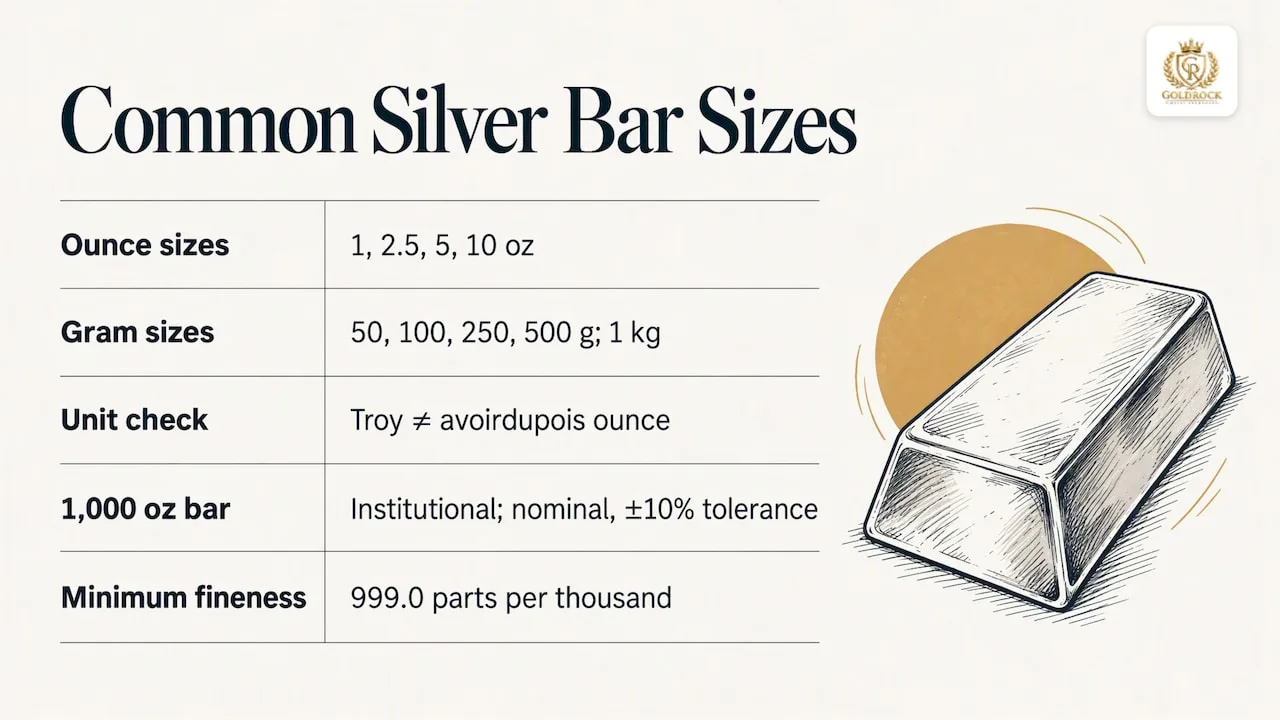
The 1,000 oz bar is a different animal. It is an institutional format, and under the LBMA technical specifications it is a nominal weight with a ±10% tolerance and a minimum fineness of 999.0 parts per thousand. The stamped gross weight, not the label “1,000 oz,” tells you what is actually in the bar.
Exact length, width and thickness differ from refiner to refiner, so treat any dimension as approximate and confirm it on the product page or with the manufacturer’s published dimension list.
Why two bars of the same weight can look so different
The method of manufacture drives the shape. Stamped bars are cut or rolled from sheet and struck, which makes them thin and relatively flat. Cast bars are poured into molds, which makes them thicker with a different footprint. Manufacturer dimension lists, such as Umicore’s silver bar specifications, show this clearly: small stamped formats from 10 g to 1 oz carry small thickness figures, while cast formats from 250 g to 1 kg are noticeably thicker.
What that means in practice:
- Thicker cast bars take more vertical space in a tray or box.
- Thin stamped bars stack flatter but can scratch or bend more easily.
- Mixed refiners at the same weight rarely share identical dimensions, so test-fit before you buy storage.
Pro Tip: Buy storage after you buy a sample bar, not before, so your trays and tubes match the bars you actually own.
Choosing a size: stacking, storage, liquidity and premiums
Uniform sizes make life easier. Identical bars fit standard tubes, trays and boxes, and they are simple to count and inventory. The most compatible choices for most buyers are 1 oz, 10 oz and 1 kg.
Liquidity usually favors the middle of the range. The 1 oz and 10 oz bars tend to trade most easily, and fractional bars help when you want to sell a small amount. Larger bars generally carry a lower premium per ounce but are harder to divide, so weigh the savings against how flexible you need to be.
Three simple profiles:
- The steady stacker: 1 oz and 10 oz bars, bought in matching lots for easy counting and resale.
- The small investor: a mix of 1 oz and 5 oz bars, keeping entry costs low while holding some flexibility.
- The long-term holder: 100 g up to 1 kg bars, where compact storage and a lower premium per ounce matter more than divisibility.
A kilo bar holds about 32.1507 troy ounces, which is why one kilo bar often replaces a whole tube of 1 oz bars in a safe.
Does bar size affect IRA eligibility?
Size alone does not decide it. IRS guidance ties eligibility to qualifying bullion that meets the fineness standard and sits in the physical possession of the IRA trustee. That is general educational information, not tax advice. Form 5305-S and related IRS materials reiterate that collectibles are generally prohibited in IRAs, with narrow exceptions for certain bullion and coins when custody and fineness requirements are met.
Before you buy, confirm these points with your custodian:
- The bar’s fineness meets the requirement for IRA bullion.
- The custodian and depository accept the specific bar and refiner.
- The format is practical for custody, since a 1,000 oz institutional bar rarely suits an individual account.
You can read more in our guide to IRA-approved silver and custody and our overview of Gold IRA rules.
How to measure and verify a bar
Start with the markings. A genuine bar typically shows its stamped weight, fineness (.999 or better), the refiner’s mark and, on many bars, a serial number. Larger bars may come with assay documentation.
- Measure length, width and thickness with calipers and compare them with the refiner’s listed dimensions.
- Weigh the bar on a digital scale that reads in troy ounces or grams.
- Request assay documentation or third-party verification when a bar lacks clear markings.
Pro Tip: Weigh and photograph every bar the day it arrives, so you have a baseline if anything looks different later.
Our take on picking sizes in practice
In our conversations, sizing can involve balancing premiums and convenience. For stacking, we usually steer people toward matching 1 oz and 10 oz bars. For retirement accounts, we start with the custodian’s accepted list, then pick sizes that fit. Our in-house IRA department and insured private delivery take the logistics off your plate, so the size decision stays simple.
— Blake
Get help choosing the right silver bar size
We offer personalized guidance on silver bar sizing, self-directed IRA setup and insured private delivery, so you can confirm the right size before you buy. 
If you want to confirm sizing, IRA acceptance and delivery or custody options, Request a Free Precious Metals Consultation or call (888) 859-0978. You can also learn how our Precious Metals IRA works or browse our silver bars and coins.
This article is general information, not a substitute for advice from a qualified financial advisor. Consult a qualified financial professional about your own circumstances before acting on anything here.
FAQ
What is the size of a 1,000 oz silver bar?
The LBMA specification lists the permitted top dimensions and a minimum fineness of 999.0 parts per thousand. Check the stamped gross weight rather than the nominal label.
How many troy ounces are in a kilo bar of silver?
A 1 kg silver bar holds approximately 32.1507 troy ounces. That is slightly more than 32 troy ounces, because a troy ounce is lighter than an avoirdupois ounce.
How big is a 100 g silver bar?
A 100 g bar is a compact retail format. Its exact dimensions and weight should be confirmed from the product specifications. Its exact length, width and thickness depend on the refiner and on whether it is stamped or cast, so check the manufacturer’s listed dimensions.
What is the 80/50 rule for silver?
We could not find a recognized industry or regulatory standard by that name, and definitions online vary. If you saw it in a listing or a forum post, ask the seller to explain what it measures before relying on it.