
Silver is defined as a precious metal that trades at a fraction of gold’s price because it is more geologically abundant, heavily consumed by industry, and absent from central bank reserve programs. As of mid-2026, gold exceeds $5,000 per ounce, while silver remains accessible to retail investors at a significantly lower price per ounce. Understanding why silver is more affordable than gold requires looking at three forces: geological scarcity, industrial demand, and institutional buying patterns. Each one shapes the silver vs gold prices gap in a distinct and measurable way.
Why silver is more affordable than gold: scarcity and supply
The single biggest reason silver costs less than gold is that silver is far more common in the Earth’s crust. Silver is roughly 19 times more abundant than gold geologically. Greater abundance means miners extract more silver each year, which keeps supply higher and price lower relative to gold.
Silver’s mining economics add another layer to this story. Most silver does not come from dedicated silver mines. It arrives as a byproduct of copper, zinc, and lead mining operations. That means silver supply expands whenever base metal demand rises, regardless of silver’s own price. Gold mining, by contrast, responds directly to gold’s price, making supply tighter and more controlled.
The gold-to-silver price ratio has historically averaged between 60:1 and 80:1. That ratio is far wider than the 19:1 geological abundance ratio. The gap between those two numbers reflects everything beyond geology: industrial demand, institutional preferences, and market perception of each metal’s monetary role.
- Silver’s above-ground supply grows faster than gold’s each year.
- Base metal mining floods the market with silver even during low-demand periods.
- Gold’s dedicated mining industry adjusts output more precisely to price signals.
- The price ratio consistently exceeds the geological abundance ratio, confirming that supply alone does not explain the full price gap.
Pro Tip: Watch the gold-to-silver ratio as a timing signal. When the ratio climbs above 80:1, silver is historically cheap relative to gold. When it falls below 60:1, gold is the relative bargain.
How industrial demand keeps silver prices lower
Approximately 50% of silver demand comes from industrial applications, compared to roughly 7% for gold. That single statistic explains a great deal about the cost of silver compared to gold. Silver is a working metal. Gold is a wealth-storage metal. Those two roles carry very different price dynamics.

Silver’s industrial footprint spans electronics, solar panels, electric vehicles, and medical devices. Every smartphone contains a small amount of silver. Every solar panel uses silver paste in its photovoltaic cells. These applications consume silver in quantities too small to recycle economically. Industrial silver losses are largely unrecyclable, which permanently removes supply from the market.
This industrial role creates a paradox. Silver’s heavy consumption should theoretically push prices higher over time. Yet the same industrial demand ties silver’s price to economic cycles. When manufacturing slows, silver demand drops sharply. That cyclical sensitivity keeps silver’s price anchored to economic conditions rather than pure monetary value, which suppresses its floor price relative to gold.
Gold, by contrast, holds its value through recessions because gold demand is primarily monetary, driven by investment, jewelry, and central bank reserves. Only about 7% of gold goes to industrial use. Gold does not disappear into circuit boards. It circulates between vaults, jewelry boxes, and ETFs, maintaining a stable above-ground stock.
- Electronics manufacturing: silver in circuit boards, connectors, and switches.
- Renewable energy: silver paste in solar photovoltaic cells.
- Medical applications: silver’s antimicrobial properties in wound dressings and coatings.
- Electric vehicles: silver in battery management systems and charging contacts.
Why central banks buy gold but not silver
Central banks hold thousands of tonnes of gold as reserve assets. They hold virtually no silver. This institutional preference is one of the most underappreciated factors affecting silver prices, and it directly widens the affordability gap between the two metals.
The reason comes down to value density. Storing $1 billion in gold requires a small vault. Storing $1 billion in silver requires warehouse-scale space. A central bank managing national reserves cannot practically hold silver. The logistics make it impractical at institutional scale.
| Feature | Gold | Silver |
|---|---|---|
| Primary demand driver | Monetary reserves and investment | Industrial manufacturing |
| Central bank holdings | Thousands of tonnes globally | Negligible |
| Value density | Very high per unit weight | Low per unit weight |
| Storage for $1 billion | Small vault | Large warehouse |
| Price floor support | Strong institutional demand | Weak institutional demand |
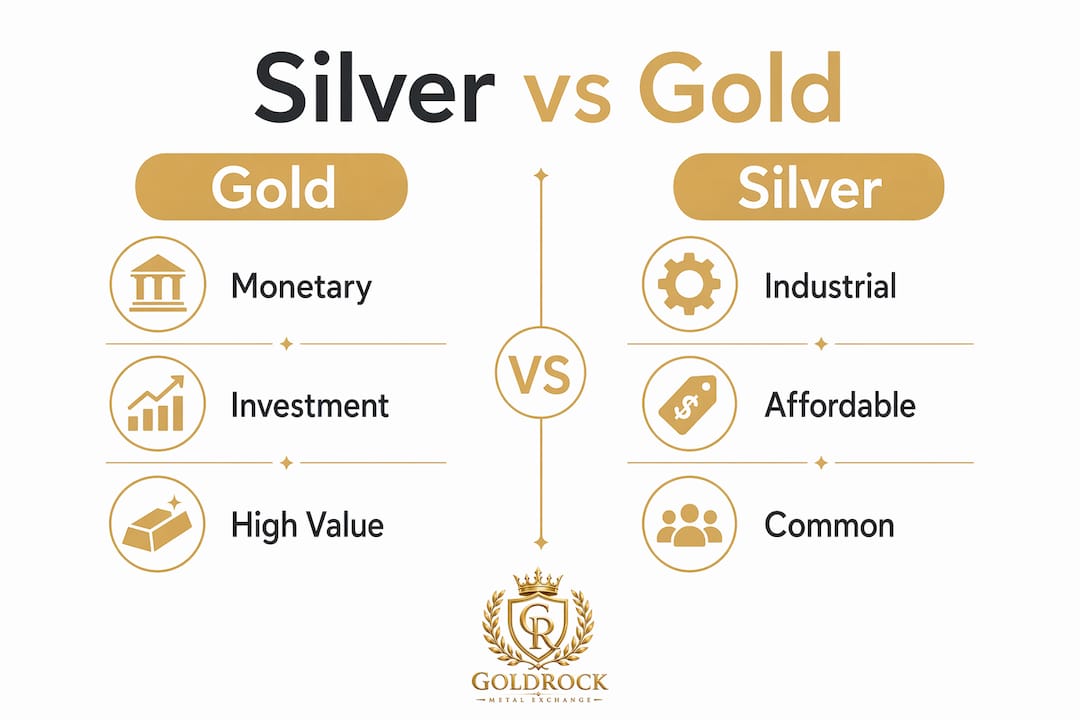
This table shows why the affordability of silver vs gold is structural, not accidental. Gold has a built-in price floor because central banks and sovereign wealth funds continuously buy and hold it. Silver lacks that institutional backstop. When investor sentiment turns negative, silver prices fall harder and faster because no central bank steps in to absorb supply.
Price volatility, market size, and what it means for investors
Silver’s price is approximately twice as volatile as gold’s on a historical basis. That volatility is a direct result of silver’s smaller market size, its industrial demand sensitivity, and the absence of central bank buying. For investors, this cuts both ways.
Silver’s higher volatility offers greater upside in bull markets but can cause steeper losses when industrial demand slows. A 10% move in gold might correspond to a 20% move in silver during the same period. Investors who understand this dynamic can use silver tactically, buying during economic slowdowns when prices dip and selling into industrial recoveries.
The cost of buying silver also carries hidden friction. Silver often carries higher dealer premiums as a percentage of spot price compared to gold. Many U.S. states apply sales tax to silver purchases but exempt investment-grade gold. Storage costs per dollar of value are also higher for silver because of its bulk. These factors matter when calculating the true cost of silver compared to gold.
Pro Tip: If you buy silver for long-term holding, prioritize one-ounce rounds or ten-ounce bars. They carry lower premiums per ounce than fractional coins and store more efficiently per dollar of value.
Silver’s affordability makes it the natural entry point for young investors building wealth in precious metals. A $500 budget buys a meaningful position in silver but barely registers as a fraction of one gold coin. That accessibility is real and matters for portfolio building at the early stages.
Silver also plays a distinct role in inflation hedging strategies. Because silver responds to both monetary inflation and industrial demand growth, it can outperform gold during periods of rising prices combined with economic expansion. That dual sensitivity is a feature, not a flaw, for investors who understand it.
Key Takeaways
Silver is more affordable than gold because it is geologically abundant, industrially consumed, and excluded from central bank reserve programs, creating a structural price gap that reflects market role rather than intrinsic worth.
| Point | Details |
|---|---|
| Geological abundance | Silver is 19 times more common than gold in the Earth’s crust, which raises supply and lowers price. |
| Industrial demand | About 50% of silver demand is industrial, tying its price to economic cycles rather than monetary value. |
| No central bank demand | Central banks hold gold for reserves but avoid silver due to storage impracticality, removing a key price floor. |
| Higher volatility | Silver’s price moves roughly twice as much as gold’s, creating both greater risk and greater upside potential. |
| Hidden buying costs | Dealer premiums and sales tax on silver can be higher than on gold, affecting the true cost per dollar invested. |
Silver’s affordability is a feature, not a flaw
I have watched investors dismiss silver as “the poor man’s gold” for years. That framing misses the point entirely. Silver’s lower price is not a sign of weakness. It is the direct result of silver being a fundamentally different asset with a different market role.
Gold is the anchor. It holds value through recessions, currency crises, and geopolitical shocks because central banks and sovereign funds treat it as a reserve asset. I recommend gold as the core of any precious metals portfolio, especially for investors prioritizing capital preservation. Gold does not need to do anything exciting. Its job is to hold ground.
Silver is the tactical complement. Its industrial exposure means it can surge during economic expansions and technology booms. Solar energy growth, electric vehicle adoption, and electronics manufacturing all drive silver demand in ways that have nothing to do with monetary policy. That makes silver a genuine growth play inside a metals allocation, not just a cheaper substitute for gold.
The gold-to-silver ratio is the single most useful tool I know for timing between the two metals. When the ratio is historically wide, silver is cheap relative to gold and worth accumulating. When it compresses, gold becomes the relative value. Monitoring this ratio costs nothing and provides a clear, data-driven signal for rebalancing.
One thing investors consistently underestimate is silver’s storage logistics. $50,000 in silver typically weighs over 50 pounds and requires significantly more secure space than gold of equivalent value. Plan for that before you buy. The physical reality of holding silver changes your storage and insurance budget in ways that affect your net return.
— Blake
Goldrockmetalexchange: your starting point for precious metals
Goldrockmetalexchange gives you direct access to live gold and silver prices so you can track the gold-to-silver ratio in real time and act when the numbers favor your strategy. Whether you are buying your first silver round or expanding a gold position, transparent pricing matters.

The Goldrockmetalexchange product catalog covers physical gold, silver, platinum, and palladium in a range of formats suited to different budgets and storage plans. For investors who want tax advantages, Goldrockmetalexchange’s dedicated IRA department handles the transfer of retirement accounts into self-directed precious metals IRAs with insured delivery and ongoing guidance. The team works with you directly, not through a call center script.
FAQ
Why is silver so much cheaper than gold per ounce?
Silver is roughly 19 times more abundant in the Earth’s crust than gold, and its supply grows as a byproduct of base metal mining. Combined with the absence of central bank demand, this keeps silver’s price significantly lower than gold’s.
Is silver a better investment than gold for beginners?
Silver’s lower price per ounce makes it more accessible for investors with smaller budgets, but its price is approximately twice as volatile as gold’s. Most financial advisors recommend holding both, with gold as the stable core and silver as a smaller, growth-oriented position.
What factors affect silver prices the most?
The three biggest factors affecting silver prices are industrial demand, the gold-to-silver price ratio, and overall economic growth. Because about 50% of silver demand is industrial, economic slowdowns hit silver prices harder than gold prices.
Does silver have sales tax but gold does not?
In many U.S. states, silver purchases are subject to sales tax while investment-grade gold is exempt. This difference raises the effective cost of buying silver and is an important consideration when comparing the true cost of silver compared to gold.
What is the gold-to-silver ratio and why does it matter?
The gold-to-silver ratio measures how many ounces of silver it takes to buy one ounce of gold. Historically averaging between 60:1 and 80:1, the ratio serves as a timing signal: a high ratio suggests silver is undervalued relative to gold, and a low ratio suggests the opposite.