

Precious metals transit coverage is a specialized insurance policy that protects gold, silver, platinum, and palladium against theft, loss, and physical damage during transport. Standard homeowners policies limit precious metals coverage to as little as $200–$500, leaving most of a collection’s value completely exposed. For investors shipping bullion worth tens of thousands of dollars, that gap is not a technicality. It is a serious financial risk. Understanding what is precious metals transit coverage, and how it differs from standard insurance, is the first step toward protecting physical assets in transit.
What is precious metals transit coverage and why does it matter?
Precious metals transit coverage is defined as an all-risk insurance policy that activates the moment a shipment leaves its origin and remains in force until delivery is confirmed. The industry term for this class of insurance is specie insurance, which treats gold, silver, and other high-value portable assets as a distinct risk category. Generic personal property coverage does not apply the same underwriting standards, which is why specie insurance markets exist as a separate specialty.
The distinction matters because precious metals are uniquely portable and uniquely targeted. A thief who intercepts a shipment of gold coins faces no barrier to liquidating the asset. Standard carrier liability policies acknowledge this risk by capping payouts at contractual limits, often far below actual market value. Transit coverage for metals fills that gap with broad, asset-specific protection.

Goldrockmetalexchange provides insured private delivery for physical metals purchases, which means buyers receive coverage from dispatch through delivery confirmation. That kind of end-to-end protection is the practical application of what transit coverage is designed to do.
What does precious metals transit coverage protect against?
Transit coverage for metals operates on an all-risk basis, meaning it covers any cause of loss unless specifically excluded. The covered risks typically include:
- Theft during transport by any carrier or courier
- Mysterious disappearance, which means loss with no identifiable cause
- Physical damage from handling, accidents, or environmental exposure
- Loss in transit, including misrouted or undelivered shipments
The phrase “mysterious disappearance” deserves attention. It covers situations where a package simply vanishes with no evidence of theft or damage. Standard homeowners policies exclude this category entirely. Transit insurance covers mysterious disappearance specifically because bullion shipments face this risk more than almost any other cargo.
Standard exclusions include losses caused by war, government seizure, intentional damage by the insured party, and inherent defect in the metals themselves. These exclusions are consistent across most specie insurance policies and are not negotiable.
Pro Tip: Ask your insurer for a written list of all exclusions before purchasing a transit policy. Verbal assurances about coverage scope carry no legal weight at claims time.
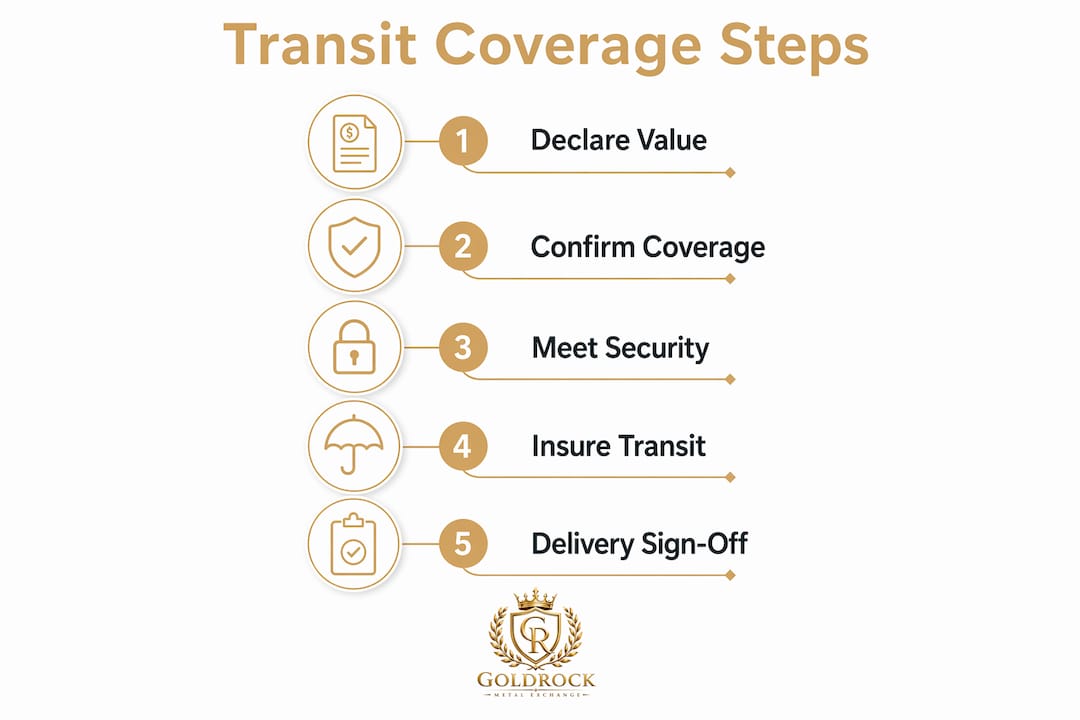
Transit coverage is also distinct from depository or vault insurance. Vault insurance protects metals while they sit in a secured facility. Transit coverage protects metals only while they are moving. The two policies must work together to create uninterrupted protection.
How do individuals obtain coverage for precious metals transport?
Investors and collectors have three main paths to securing transit coverage for metals:
-
Scheduled personal property rider. This is an add-on to an existing homeowners policy. It schedules specific items at declared values and extends coverage during transit. High-net-worth insurers offer sublimits up to $5,000–$10,000 on these riders, compared to $200–$500 on standard policies. The rider must explicitly name transit as a covered event.
-
Standalone inland marine insurance. This is the most common policy type for serious collectors and investors. Inland marine insurance was originally designed to cover goods in transit and remains the standard vehicle for precious metals transit coverage. It covers assets from the moment of dispatch until delivery confirmation, regardless of the carrier used.
-
Dealer-provided transit insurance. Many dealers, including Goldrockmetalexchange, include insured shipping as part of the purchase transaction. This coverage is active during the shipment period and is managed by the dealer on the buyer’s behalf.
Declaring accurate value is non-negotiable for all three options. Undervaluing a shipment to reduce premiums creates a co-insurance problem. If you declare $10,000 on a $30,000 shipment and file a total loss claim, the insurer pays only the declared amount. The gap is your loss, not theirs.
Coverage period is another critical detail. The policy must explicitly state that coverage begins at the point of origin, not at the carrier’s first scan. Some policies activate only after the carrier accepts the package, leaving a window of uninsured exposure during packaging and handoff.
Pro Tip: Confirm in writing that your policy covers the loading and unloading phases of transit, not just the time the package is in the carrier’s possession.
What security protocols and packaging requirements impact coverage validity?
Compliance with insurer-mandated security protocols is not optional. Deviation from required protocols can void a policy entirely, even if the loss is otherwise covered. Insurers treat security compliance as a condition of coverage, not a recommendation.
Common mandatory security requirements include:
- Armored transport for shipments above specified value thresholds
- Dual sign-off delivery, requiring two authorized parties to confirm receipt
- Tamper-evident paper tape on all package seams (plastic tape is typically prohibited)
- Approved packaging materials specified by the insurer in writing
- Prior written authorization from the insurer before dispatch for high-value shipments
The packaging rules are more specific than most investors expect. Typical requirements forbid plastic seals and mandate tamper-evident paper tape, verified documentation, and insurer approval before the package leaves your hands. One deviation, even a minor one, can nullify the claim entirely.
The logic behind these requirements is straightforward. Insurers price specie coverage based on the assumption that the insured follows security protocols. When protocols are skipped, the risk profile changes, and the insurer is no longer bound by the original terms.
Pro Tip: Request the full written security and packaging protocol from your insurer before you purchase materials or schedule a shipment. Confirm every requirement in writing, not over the phone.
Goldrockmetalexchange handles these requirements on behalf of buyers by using vetted carriers and documented security procedures for every delivery. Buyers who understand delivery security standards can verify that their shipment meets insurer requirements before it leaves the facility.
Common pitfalls in transit coverage for precious metals
The most expensive mistakes in metals transit insurance are not about choosing the wrong policy. They are about misunderstanding when coverage ends and what it actually covers.
-
Coverage ends at delivery sign-off. Dealer transit insurance expires the moment you or an authorized recipient signs for the package. Metals stored at home after that point are uninsured unless you have activated a personal inland marine or scheduled property policy. This gap catches many buyers off guard.
-
Carrier declared value is not insurance. Carrier limits often cap at $50,000 per package, and even that limit is a contractual ceiling, not a true insurance payout. Carrier liability does not cover mysterious disappearance, and it requires proof of carrier negligence. True all-risk transit insurance requires no such proof.
-
Insurer experience matters. Not every insurance company understands specie risks. A general property insurer may issue a policy that appears to cover bullion but contains exclusions that eliminate coverage for the most common transit losses. Work with insurers who have documented experience in specie and bullion coverage.
-
Post-delivery storage is a separate problem. Transit coverage and vault or home storage coverage are distinct products. Buyers who store metals at home need a personal policy that activates immediately after delivery. Buyers who transfer metals to a depository need to confirm that the depository’s insurance covers their specific holdings.
-
Claims require documentation. Filing a transit loss claim without dispatch records, carrier receipts, and photographic evidence of packaging significantly reduces the chance of a successful payout. Document every step of the shipping process before the package leaves your hands.
Key Takeaways
Precious metals transit coverage is a specialized all-risk policy that protects bullion from dispatch through delivery, filling critical gaps that standard homeowners and carrier liability policies leave open.
| Point | Details |
|---|---|
| Standard policies fall short | Homeowners policies typically cap precious metals coverage at $200–$500, far below most collection values. |
| Specie insurance is the standard | Inland marine and specie policies provide all-risk transit protection, including mysterious disappearance. |
| Compliance is a coverage condition | Failing to follow insurer-mandated packaging and security protocols can void a claim entirely. |
| Coverage ends at delivery | Dealer transit insurance expires on sign-off; activate a personal policy immediately to avoid a coverage gap. |
| Declared value determines payout | Undervaluing a shipment limits your claim to the declared amount, not the actual market value of the metals. |
Why I think most investors underestimate transit risk
Most investors spend considerable time choosing the right gold or silver product and almost no time thinking about what happens between the dealer’s vault and their front door. That gap in attention is where real losses occur.
The uncomfortable truth about transit coverage is that the policy document is only half the protection. The other half is operational. Insurers write policies with the assumption that you will follow every security and packaging requirement to the letter. When you do not, the policy becomes unenforceable at exactly the moment you need it most.
I have seen investors assume that a dealer’s insured shipping guarantee covers them indefinitely. It does not. The moment you sign for a package, that coverage is gone. If you plan to store physical gold at home rather than in a depository, you need a personal policy in place before the delivery truck arrives.
The other mistake I see repeatedly is treating carrier declared value as a safety net. It is not. Carrier liability is a contractual limit with narrow conditions for payout. All-risk specie insurance is a completely different product. Investors who conflate the two often discover the difference only after a loss.
My practical recommendation is to treat transit coverage as a three-part system: the right policy, strict protocol compliance, and immediate activation of post-delivery coverage. Miss any one of the three, and the other two provide incomplete protection.
— Blake
Goldrockmetalexchange’s approach to insured precious metals delivery
Goldrockmetalexchange builds insured delivery into every purchase transaction, so buyers do not have to source transit coverage independently for their initial shipment. Every order ships with documented security procedures and carrier protocols that meet insurer requirements.

Buyers who want to understand the full range of metals products and shipping options can review available gold, silver, platinum, and palladium offerings alongside the delivery terms for each. For investors building a long-term position through a self-directed IRA, Goldrockmetalexchange’s IRA department handles custody and insured transfer logistics as part of the account setup process. Every step is documented, and coverage terms are available before purchase.
FAQ
What is the difference between transit coverage and homeowners insurance for metals?
Homeowners policies typically cap precious metals coverage at $200–$500, while transit coverage provides all-risk protection for the full declared value of a shipment. Transit coverage also includes mysterious disappearance, which homeowners policies exclude.
Does carrier liability replace precious metals transit insurance?
Carrier liability is a contractual ceiling, not true insurance. It requires proof of carrier negligence and often caps payouts well below actual metal values. All-risk transit insurance covers loss regardless of fault.
When does precious metals transit coverage end?
Coverage ends at delivery sign-off. Once a recipient confirms receipt, dealer-provided transit insurance expires immediately. Investors must activate a personal inland marine or scheduled property policy before delivery to maintain uninterrupted protection.
What happens if I do not follow packaging requirements?
Failure to comply with insurer-mandated packaging and security protocols can void the policy entirely. Even a minor deviation, such as using plastic tape instead of tamper-evident paper tape, is grounds for claim denial.
Do I need separate insurance for metals stored at a depository?
Depository insurance covers metals inside the vault only. It does not extend to transit. Investors need both transit coverage for shipments and depository or personal coverage for stored metals to maintain complete protection.