

A personalized precious metals investment plan is a customized approach that matches your wealth protection goals, risk tolerance, and timeline with specific metals, allocations, and investment vehicles. Financial advisors recommend allocating 5%–15% of a total portfolio to hard assets, with the exact percentage depending on your individual financial situation. That range is wide by design. A 35-year-old building retirement wealth and a 62-year-old protecting existing assets need very different strategies. The industry term for this approach is a tailored metals allocation strategy, and understanding how to build one is the difference between a productive hedge and an expensive mistake.
What is a personalized precious metals investment plan?
A personalized precious metals investment plan starts with one question: what do you need this money to do? The answer shapes every decision that follows, from which metals you buy to how you store them.
Your goals typically fall into one of four categories:
- Wealth preservation: Protecting existing assets from inflation and currency devaluation
- Portfolio diversification: Reducing correlation with stocks and bonds
- Retirement security: Building a tax-advantaged position through a self-directed IRA
- Inflation hedging: Maintaining purchasing power over a long time horizon
Risk tolerance matters just as much as goals. Investors with low risk tolerance tend to favor gold, which carries lower volatility than silver or palladium. Investors comfortable with wider price swings may allocate more to silver, which offers higher upside but also sharper drawdowns.
Investment horizon is the factor most investors underestimate. Metals suit long-term diversification but are unsuitable for funds you will need within 12 months. Short time horizons amplify volatility risk and reduce the chance of recovering from a price dip before you need to sell.
Pro Tip: Before buying a single ounce, write down your target allocation percentage, your investment horizon in years, and your primary goal. Investors who skip this step tend to buy reactively during price spikes and sell during corrections, which is the opposite of a sound strategy.
How to choose the right metals and investment vehicles
Gold, silver, platinum, and palladium each carry distinct risk and return profiles. Matching the right metal to your goals is the foundation of any individualized precious metals strategy.

Gold is the most liquid and widely held. It functions primarily as a store of value and inflation hedge. Silver carries more industrial demand, which adds a growth component but also more volatility. A silver investment portfolio works well for investors who want inflation protection with some upside exposure. Platinum and palladium are smaller markets with higher price volatility, driven heavily by automotive and industrial demand. They suit investors who already hold gold and silver and want additional diversification.
Beyond the metal itself, you choose the investment vehicle. The three main options are physical bullion, exchange-traded funds (ETFs), and precious metals IRAs.
| Vehicle | Liquidity | Storage required | Tax advantages | Typical costs |
|---|---|---|---|---|
| Physical bullion | Moderate | Yes | None | Dealer premium, storage, insurance |
| Precious metals ETF | High | No | Standard capital gains | Management fee |
| Precious metals IRA | Low to moderate | IRS-approved depository | Tax-deferred or Roth | Custodial fees, storage fees |
A precious metals IRA involves four key roles: account holder, custodian, approved dealer, and secure depository, each with specific responsibilities and ongoing fees. The IRS requires metals held in an IRA to meet minimum fineness standards, with gold at .995 fine (the American Gold Eagle is the notable exception) and storage at an approved depository, not a home safe. Holding IRA metals personally disqualifies the tax benefits entirely.
ETFs offer the simplest entry point but provide no physical ownership. Physical bullion gives you direct ownership but requires storage planning. A gold IRA personalized plan combines tax advantages with physical ownership, making it the most complex but often most rewarding structure for retirement-focused investors.
Building your plan step by step
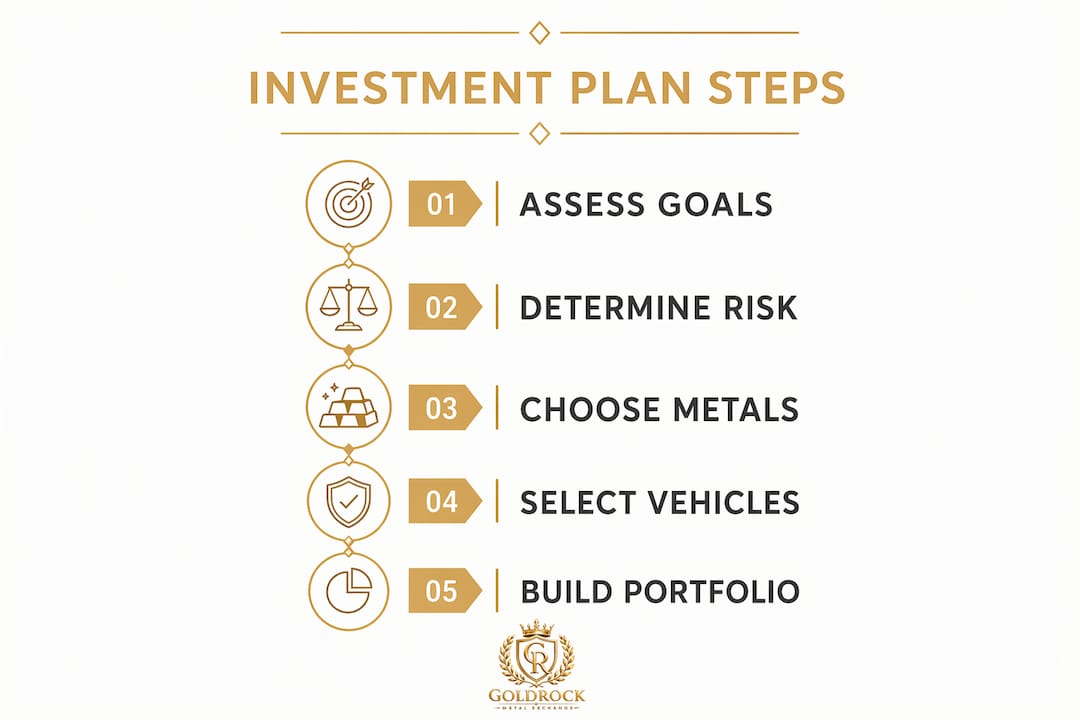
A custom gold investment strategy does not happen in one transaction. It follows a deliberate sequence that reduces risk and keeps costs under control.
- Define your goals and allocation. Decide what percentage of your portfolio goes to metals, using the 5%–15% guideline as your starting range. Adjust based on your risk tolerance and how many years until you need the funds.
- Select your metals. Start with gold for stability. Add silver if you want growth exposure. Reserve platinum and palladium for later stages once your core position is established.
- Choose your investment vehicle. Decide between physical bullion, an ETF, or a precious metals IRA based on your tax situation, timeline, and storage preferences.
- Select a reputable dealer. Look for transparent pricing, clear fee disclosures, and no high-pressure sales tactics. Goldrockmetalexchange offers dedicated IRA support and insured delivery, which simplifies the process for both new and experienced investors.
- Place your orders using dollar-cost averaging. Spacing out purchases rather than making a single lump-sum investment smooths your average price per ounce over time and reduces timing risk.
- Arrange secure storage. For physical metals outside an IRA, choose between a home safe, a bank safe deposit box, or a professional vault. For IRA metals, your custodian handles approved depository placement.
- Review your allocation annually. Metal prices move. A position that started at 10% of your portfolio may drift to 15% after a price rally. Rebalancing keeps your plan aligned with your original goals.
Pro Tip: Pay attention to payment method when purchasing. Check or wire transfers typically cost less than credit card payments, and some dealers offer discounts for crypto. The difference can add up meaningfully on larger orders.
Diversification within metals matters too. Holding only gold concentrates your risk in one market. A mix of gold and silver, with smaller positions in platinum or palladium if appropriate, gives you exposure to different demand drivers and reduces the impact of any single metal’s price movement.
Risks, costs, and mistakes to avoid
Every precious metals investment carries risk. No government backs physical metals, and no investment in this category is guaranteed. Knowing the specific risks lets you plan around them rather than be surprised by them.
“Transparency about fees and risks is crucial. No precious metals investment is risk-free or government-backed.” — FINRA
The most common risks and red flags include:
- Market volatility: Metal prices can drop sharply in short periods, particularly silver and palladium.
- Liquidity challenges: Physical bullion takes time to sell. It is not a liquid asset in the way stocks are.
- Storage risk: Home storage exposes metals to theft and loss. Homeowner insurance policies typically exclude or severely limit coverage of metals stored at home, requiring expensive independent insurance riders.
- Fraud and high-pressure sales: FINRA warns against salespeople who promise higher safety or push urgent purchases without proper risk disclosure. Any guarantee of safety or outsized returns is a red flag.
- Hidden fees: Dealer premiums, storage fees, and IRA custodial fees add up. Always request a full fee schedule before committing.
Professional vaulting costs more than a home safe upfront but eliminates theft risk, satisfies IRS requirements for IRA metals, and typically costs less than a comprehensive independent insurance policy. For most investors, it is the better choice. Goldrockmetalexchange provides insured delivery options and guidance on approved storage, which removes much of the guesswork from this decision.
Key Takeaways
A personalized precious metals investment plan works when it aligns your specific goals, timeline, and risk tolerance with the right metals, vehicles, and storage from the start.
| Point | Details |
|---|---|
| Allocate within the 5%–15% range | Adjust your metals allocation based on risk tolerance and years until you need the funds. |
| Match metal to goal | Gold suits preservation; silver adds growth exposure; platinum and palladium diversify further. |
| Use dollar-cost averaging | Space out purchases over time to reduce timing risk and smooth your average cost per ounce. |
| Understand IRA rules | IRS-approved metals and depositories are required; home storage disqualifies tax benefits entirely. |
| Vet your dealer carefully | Transparent fees, no pressure tactics, and insured delivery are non-negotiable selection criteria. |
What I have learned building precious metals plans for real investors
The most common mistake I see is investors treating precious metals as a single category. They decide to “buy gold” without specifying whether they mean physical coins, a gold ETF, or a gold IRA. Each of those is a fundamentally different investment with different costs, tax treatment, and liquidity. Getting that decision right before you spend a dollar is more valuable than any market timing strategy.
The second pattern I notice is that investors who skip the allocation step tend to over-concentrate. They buy heavily during a price rally, watch the position grow to 30% or 40% of their portfolio, and then face a painful choice when prices correct. The 5%–15% guideline exists for a reason. It keeps metals doing their job as a hedge without turning your portfolio into a single-asset bet.
Long-term thinking separates successful metals investors from frustrated ones. The key question is not market hype but “When will I need this money?” Investors who answer that question honestly and build their plan around the answer tend to stay disciplined through volatility. Those who buy based on fear or news cycles tend to sell at the worst possible time.
Working with a fiduciary or a dealer who discloses all fees upfront changes the experience entirely. The education resources available through Goldrockmetalexchange give investors the context to ask the right questions before committing capital. That preparation is not optional. It is the foundation of a plan that actually holds up.
— Blake
Goldrockmetalexchange: personalized metals strategies built for your goals
Goldrockmetalexchange specializes in helping investors build tailored metal positions that match their specific financial objectives, whether that means physical bullion for direct ownership or a self-directed IRA for retirement planning.

The product catalog includes gold, silver, platinum, and palladium in bars, coins, and rounds, giving you the flexibility to build a position that fits your allocation targets. The in-house IRA department handles the coordination between custodians and approved depositories, keeping the process IRS-compliant without putting the administrative burden on you. Insured private delivery is available for physical purchases. For investors who want to start with education before committing capital, the self-directed IRA guide walks through the full structure, costs, and requirements in plain language.
FAQ
What is a precious metals buying plan?
A precious metals buying plan is a structured approach that defines your allocation percentage, metal selection, investment vehicle, and purchase schedule before you spend any capital. It replaces reactive buying with a disciplined, goal-driven process.
How much of my portfolio should go to precious metals?
Financial advisors recommend 5%–15% of a total portfolio for hard assets, with the exact figure depending on your risk tolerance and investment horizon.
What metals qualify for a gold IRA personalized plan?
The IRS requires gold to be at least .995 fine (with an exception for the American Gold Eagle), and all metals must be held at an approved depository, not stored at home. Silver, platinum, and palladium also qualify when they meet IRS fineness standards.
Is home storage safe for physical precious metals?
Home storage carries significant risk. Standard homeowner insurance policies typically exclude or severely limit precious metals coverage, and professional vaulting is generally the safer and more cost-effective long-term solution.
How does dollar-cost averaging apply to precious metals?
Dollar-cost averaging means buying a fixed dollar amount of metals at regular intervals rather than all at once. This approach smooths your average purchase price over time and reduces the risk of buying a large position right before a price decline.